



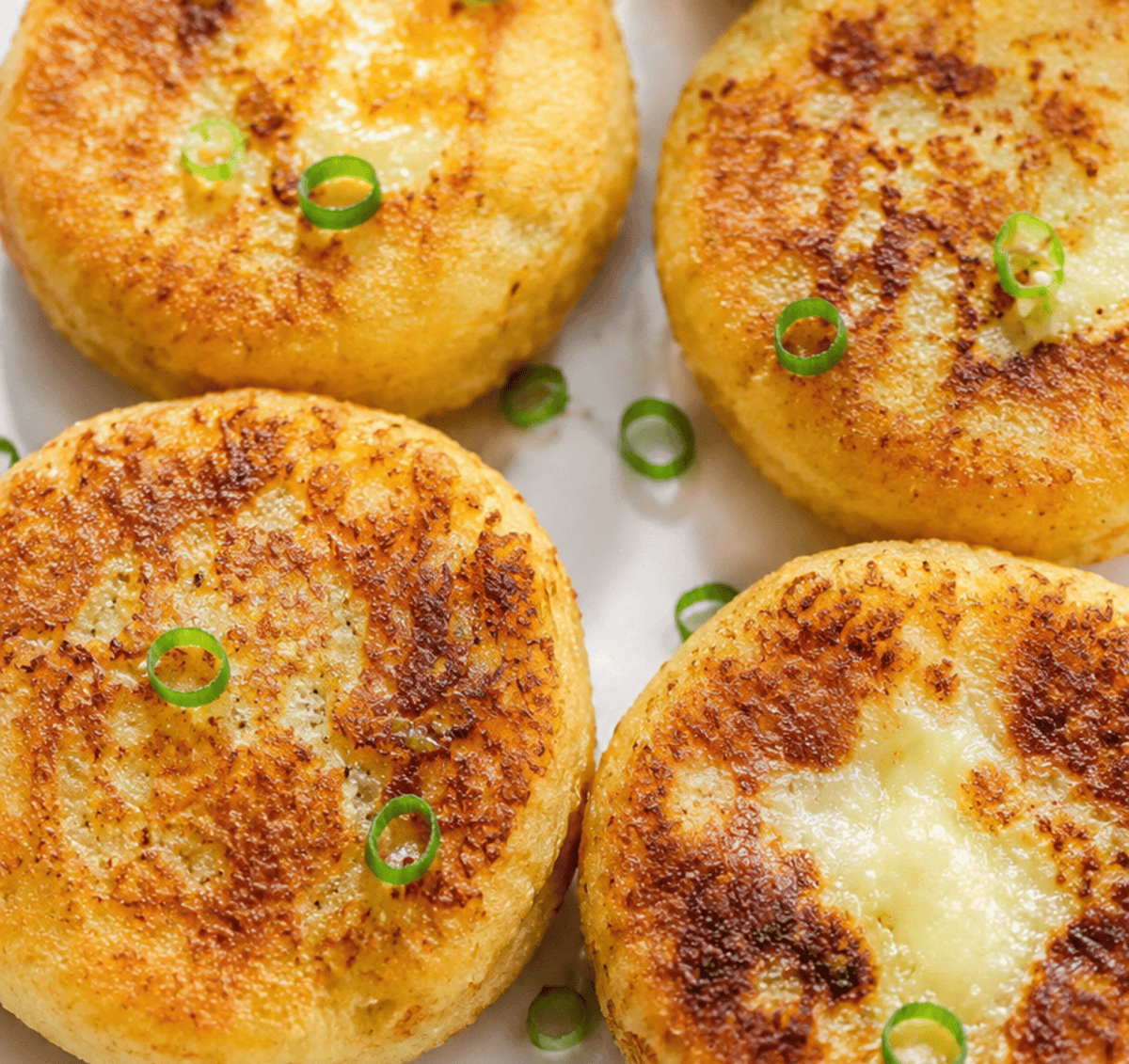
There is something wildly satisfying about a potato pancake that crackles when it hits the skillet, turns golden at the edges, and hides a stretchy pocket of melted cheese inside. These Korean Cheese Potato Pancakes are the kind of snack that feels simple, cozy, and just a little dramatic when you pull one apart.
They’re inspired by the sweet-savory Korean potato cheese pancakes often made with mashed potato, a little starch, and melty cheese tucked inside. The outside gets crisp and lightly chewy, while the middle stays soft, creamy, and gooey. You don’t need fancy equipment, and you definitely don’t need deep frying.
This recipe is beginner-friendly, budget-friendly, and perfect as an appetizer, side dish, after-school snack, or late-night comfort bite. The best part? You can make them in a regular skillet with basic grocery-store ingredients.
Why This Recipe Works
These pancakes work because the texture is built in layers. Mashed potatoes make the inside soft and creamy. Potato starch or cornstarch gives the outside a light chew and helps the pancakes hold their shape. A hot skillet and a thin coating of oil create those crisp golden edges.
The cheese filling matters too. Low-moisture mozzarella melts beautifully without making the potato mixture watery. When the pancake is hot, the cheese stretches in the center instead of leaking all over the pan.
A small amount of butter in the mashed potato adds flavor and richness. It also gives the pancakes that warm, comforting aroma that makes the kitchen smell like something good is happening before the first batch is even done.
Ingredients You’ll Need
For the Potato Pancakes
- 1 1/2 pounds Yukon Gold or russet potatoes, peeled and cubed — about 4 medium potatoes / 680 g
- 3 tablespoons potato starch or cornstarch — 24 g
- 1 tablespoon unsalted butter — 14 g
- 1 teaspoon kosher salt — 5 g
- 1/4 teaspoon black pepper — 0.5 g
- 1 teaspoon sugar, optional — 4 g
- 4 ounces low-moisture mozzarella cheese, cut into 8 small pieces or shredded — 115 g
- 2 tablespoons neutral oil, for pan-frying — 30 ml
- 1 tablespoon finely sliced green onion, optional — 6 g
Optional Dipping Sauce
- 2 tablespoons soy sauce — 30 ml
- 1 tablespoon rice vinegar — 15 ml
- 1 teaspoon honey or sugar — 7 g honey / 4 g sugar
- 1/2 teaspoon sesame oil — 2.5 ml
- 1/2 teaspoon gochujang, optional — 3 g
- 1 teaspoon toasted sesame seeds, optional — 3 g
Ingredient Deep Dive
Potatoes
Yukon Gold potatoes make a creamy, slightly buttery pancake. Russet potatoes create a fluffier texture and crisp up well. Both work, but avoid very waxy potatoes if you want a smoother mash.
Potato Starch or Cornstarch
Potato starch gives the most Korean-style chewy texture. Cornstarch is easier to find in many U.S. kitchens and still works well. Don’t skip it completely, because it helps bind the potato mixture.
Mozzarella Cheese
Low-moisture mozzarella is the safest choice because it melts without releasing too much liquid. Fresh mozzarella can make the filling watery and may cause the pancakes to split.
Sugar
The sugar is optional, but a tiny bit balances the saltiness and gives the pancakes that subtle sweet-savory street-snack flavor.
Neutral Oil
Use avocado oil, canola oil, vegetable oil, or another neutral oil with a decent smoke point. Olive oil can work, but its flavor is stronger.
Equipment Needed
- Medium microwave-safe bowl or pot
- Potato masher or fork
- Measuring spoons
- Mixing bowl
- Nonstick or well-seasoned cast iron skillet
- Thin spatula
- Paper towels
- Small bowl for dipping sauce
Step-by-Step Method
1. Cook the Potatoes
Place the peeled, cubed potatoes in a microwave-safe bowl with 2 tablespoons water. Cover loosely and microwave for 8–10 minutes, stirring once halfway through, until fork-tender.
You’ll know they’re ready when a fork slides through without resistance. If the potato still feels firm in the center, give it another minute.
You can also boil the potatoes in salted water for 12–15 minutes, then drain well.
2. Steam Off Extra Moisture
Drain the potatoes and let them sit uncovered for 2–3 minutes. This step matters because extra moisture makes the pancake mixture loose and sticky.
The potatoes should look slightly dry and fluffy around the edges, not wet or glossy.
3. Mash Until Smooth
Mash the hot potatoes with butter, salt, pepper, and sugar. The butter should melt into the potatoes and give off a warm, savory smell.
Mash until mostly smooth. A few tiny potato bits are fine, but large chunks can make the pancakes crack when you shape them.
4. Add the Starch
Sprinkle in the potato starch or cornstarch and mix until the potato mixture feels soft but moldable.
It should feel like a gentle dough. If it sticks heavily to your hands, let it cool for a few minutes or add 1 extra teaspoon of starch.
5. Divide and Fill
Divide the potato mixture into 8 equal portions. Flatten one portion in your palm, place a piece of mozzarella in the center, then fold the potato around the cheese.
Seal the edges carefully. This is the secret to keeping the cheese inside instead of watching it escape into the skillet.
6. Shape the Pancakes
Press each filled ball into a small pancake, about 1/2 inch thick. Don’t make them too thin or the cheese may burst through.
If your hands get sticky, lightly dampen them with water.
7. Heat the Skillet
Heat a nonstick skillet over medium heat. Add the oil and let it shimmer.
The oil should look loose and glossy, but it should not smoke. If it smokes, the pan is too hot and the pancakes may burn before the cheese melts.
8. Pan-Fry Until Golden
Place the pancakes in the skillet, leaving a little room between each one. Cook for 3–4 minutes per side, until golden brown and crisp.
You should hear a gentle sizzle, not an aggressive crackle. The bottoms should turn deep golden with small crisp spots.
9. Rest Briefly
Transfer the pancakes to a paper towel-lined plate and let them rest for 2 minutes.
This quick rest helps the cheese settle slightly, so the center stays gooey instead of running out immediately.
10. Serve Warm
Serve the pancakes warm with the optional dipping sauce, extra green onions, or toasted sesame seeds.
They are best when the outside is crisp and the cheese still stretches when pulled apart.
Chef Secrets and Pro Tips
- Use low-moisture cheese. It melts smoothly and helps prevent soggy centers.
- Let the potatoes steam dry. Wet potatoes make weak pancakes.
- Mash while hot. Hot potatoes absorb butter and seasoning better.
- Cool the mixture slightly before shaping. Warm is fine, but too hot can make the dough sticky.
- Seal the cheese completely. Any opening can turn into a cheese leak.
- Keep the heat at medium. High heat browns the outside too fast before the cheese melts.
- Don’t overcrowd the pan. Crowding traps steam and softens the crust.
- Use a thin spatula. It slides under the pancakes without tearing them.
- Rest before serving. Two minutes makes the texture better and prevents molten cheese burns.
- Re-crisp leftovers in a skillet or air fryer. The microwave softens the crust.
Common Mistakes and Fixes
Mistake 1: The Mixture Is Too Sticky
Fix: Let it cool for 5 minutes, then add 1 teaspoon of starch at a time until it becomes easier to handle.
Mistake 2: The Pancakes Fall Apart
Fix: The potatoes may be too wet or under-mashed. Drain well, mash smoothly, and use enough starch to bind.
Mistake 3: The Cheese Leaks Out
Fix: Use smaller cheese pieces and seal the potato mixture tightly around the filling.
Mistake 4: The Outside Burns
Fix: Lower the heat to medium or medium-low. The pancakes need enough time for the cheese to melt inside.
Mistake 5: The Pancakes Taste Bland
Fix: Potatoes need salt. Taste the potato mixture before filling and adjust seasoning.
Mistake 6: The Pancakes Are Soft Instead of Crispy
Fix: Use enough oil to lightly coat the skillet, avoid overcrowding, and let each side cook without moving too much.
Mistake 7: The Cheese Doesn’t Melt
Fix: Make sure the pancakes are not too thick. Cook over steady medium heat and cover the pan for the final minute if needed.
Variations
1. Spicy Gochujang Cheese Pancakes
Mix 1 teaspoon gochujang into the potato mixture for gentle heat and deeper savory flavor.
2. Kimchi Cheese Potato Pancakes
Add 1/4 cup finely chopped, well-drained kimchi to the potato mixture. Squeeze it dry first so the pancakes don’t get soggy.
3. Green Onion Sesame Pancakes
Stir sliced green onions and toasted sesame seeds into the potato mixture for a fresh, nutty bite.
4. Cheddar Mozzarella Pancakes
Use half shredded cheddar and half mozzarella for a sharper, more American-style cheesy center.
5. Air Fryer Version
Brush shaped pancakes lightly with oil and air fry at 375°F / 190°C for 8–10 minutes, flipping halfway. They’ll be less rich than skillet-fried but still tasty.
6. Low-Carb Friendly Swap
These are potato-based, so they are not naturally low-carb. For a lighter variation, replace up to half the potato with well-drained mashed cauliflower. Keep some potato and starch so the pancakes hold together.
7. Sweet-Savory Honey Butter Version
Skip the green onion and serve with a tiny drizzle of honey and melted butter. It gives a cozy snack-shop style finish.
8. Bacon Cheese Potato Pancakes
Add 2 tablespoons cooked, finely crumbled bacon to the potato mixture for a smoky variation.
Serving Ideas and Pairings
- Serve with soy-vinegar dipping sauce.
- Pair with cucumber salad for a cool, crisp contrast.
- Add them to a Korean-inspired snack board with kimchi, pickled radish, and dumplings.
- Serve beside grilled chicken or steak for a fun potato side.
- Top with green onions, sesame seeds, and a drizzle of spicy mayo.
- Serve with fried eggs for a savory brunch plate.
- Add them to lunch boxes with a small container of dipping sauce.
- Pair with a simple cabbage slaw to balance the richness.
Storage, Freezing, and Reheating
Refrigerating
Store cooled pancakes in an airtight container for 3–4 days. Place parchment paper between layers to prevent sticking.
Freezing
Freeze cooked and cooled pancakes on a baking sheet until firm, then transfer to a freezer bag. Freeze for up to 2 months.
Reheating in a Skillet
Reheat in a lightly oiled skillet over medium-low heat for 2–3 minutes per side.
Reheating in an Air Fryer
Air fry at 350°F / 175°C for 4–6 minutes, flipping once.
Reheating in the Oven
Bake at 375°F / 190°C for 8–10 minutes.
Microwave Note
The microwave works in a pinch, but the crust will soften. Reheat for 30–45 seconds, then crisp in a skillet if possible.
Make-Ahead and Meal Prep Plan
You can cook the potatoes and mash the mixture up to 24 hours ahead. Store it covered in the refrigerator. Let it sit at room temperature for 10–15 minutes before shaping so it’s easier to handle.
You can also shape the stuffed pancakes ahead of time. Place them on a parchment-lined plate, cover tightly, and refrigerate for up to 1 day before cooking.
For the best texture, cook them fresh. If you need meal prep convenience, fully cook the pancakes, refrigerate them, then reheat in an air fryer or skillet.
The dipping sauce can be mixed 3–4 days ahead and stored in the fridge.
FAQ
Can I use leftover mashed potatoes?
Yes, as long as they are not too loose or creamy. If your mashed potatoes already contain milk or cream, you may need extra starch to make the mixture firm enough.
Can I make Korean Cheese Potato Pancakes without potato starch?
Yes. Cornstarch is the best substitute. All-purpose flour can work, but the texture will be less chewy and slightly more bread-like.
What cheese melts best?
Low-moisture mozzarella is the best choice. Monterey Jack, mild cheddar, or a mozzarella-cheddar blend can also work.
Can I bake these instead of frying?
Yes, but they won’t be as crisp. Brush with oil and bake at 400°F / 205°C for 15–18 minutes, flipping halfway.
Why did my pancakes crack?
The potato mixture may have been too dry, too cold, or not mashed smoothly enough. Add a teaspoon of water or milk if it feels crumbly.
Can I make them gluten-free?
Yes, this recipe is naturally gluten-free if you use potato starch or cornstarch and check that your soy sauce is gluten-free. Regular soy sauce often contains wheat.
Can I make them dairy-free?
You can use dairy-free butter and a dairy-free melting cheese. The flavor and melt will depend on the brand.
Are these authentic Korean potato pancakes?
They are Korean-inspired cheese potato pancakes, similar to the popular sweet-savory potato cheese pancakes seen in Korean home cooking and snack-style recipes. Traditional Korean potato pancakes, called gamja-jeon, are often made differently with grated potato.
How do I stop the pancakes from sticking?
Use a nonstick skillet or well-seasoned cast iron pan. Also, wait until the bottom is golden before flipping; moving them too early can cause sticking.
Can I double the recipe?
Yes. Double all ingredients and cook in batches. Keep cooked pancakes warm in a 200°F / 95°C oven while finishing the rest.
Food Safety and Allergy Notes
These pancakes contain dairy from butter and mozzarella. If serving with soy sauce, note that regular soy sauce may contain wheat and soy. Use tamari if you need a gluten-free option, and always check labels for allergens.
Cook the pancakes until they are hot all the way through and the cheese is fully melted. Be careful when serving to children because the cheese center can be very hot.
Store leftovers within 2 hours of cooking. If your kitchen is very warm, refrigerate within 1 hour.
This recipe does not contain steak, but if you serve these pancakes as a side with steak, follow USDA-style doneness guidance for safety: cook whole cuts of beef to at least 145°F / 63°C with a 3-minute rest. Ground beef should reach 160°F / 71°C.
Conclusion
These Korean Cheese Potato Pancakes are simple, crispy, cheesy, and deeply satisfying. Once you learn the basic potato-to-starch-to-cheese balance, you can make them plain, spicy, savory, or snack-board ready. Serve them hot, listen for that crisp edge, and enjoy the cheese pull.


