



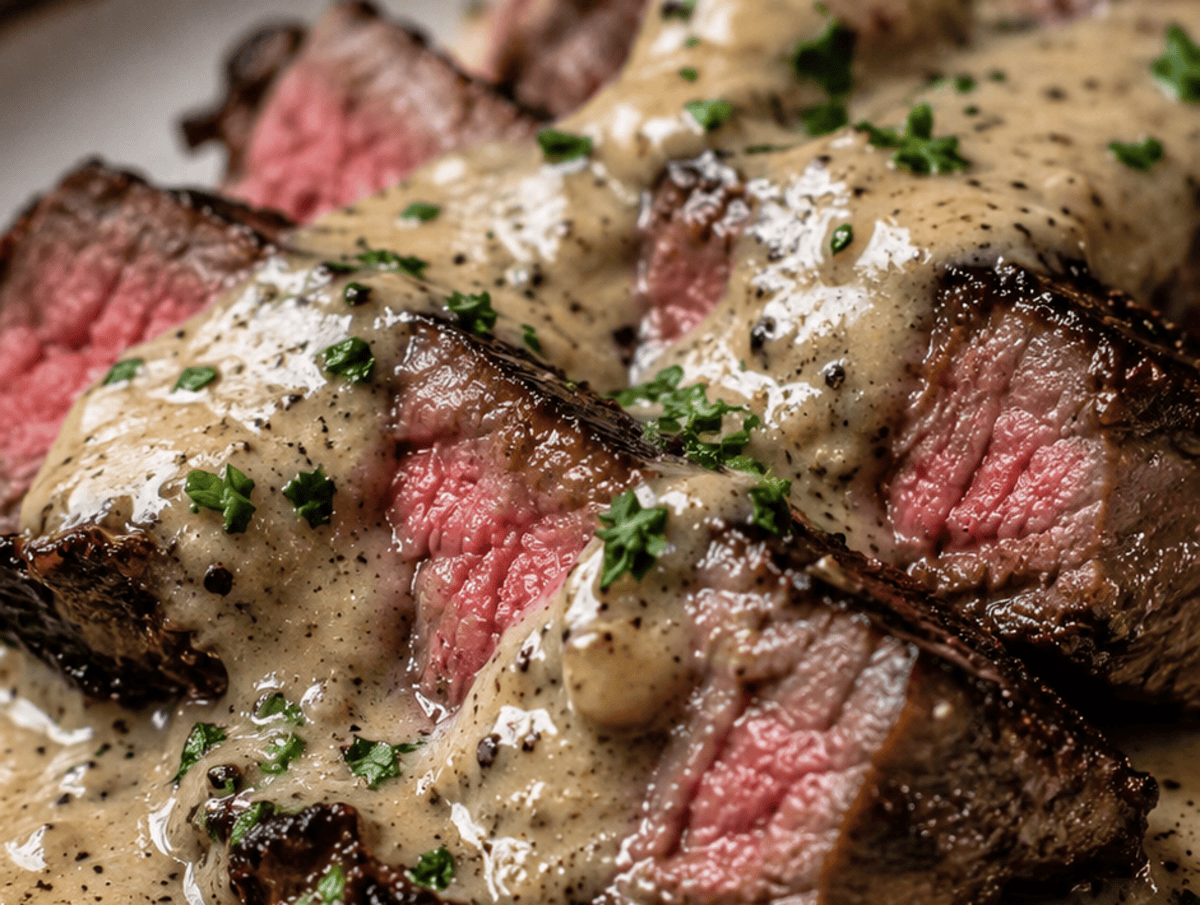
Steak with Creamy Garlic Sauce
Some dinners feel fancy without asking much from you. This Steak with Creamy Garlic Sauce is exactly that kind of meal. You get a deeply browned, juicy steak with a silky garlic cream sauce that tastes like something from a steakhouse, but everything happens in one skillet.
The best part? You do not need chef-level skills. You just need a hot pan, a little patience while the steak sears, and a few simple ingredients that turn into a rich, savory sauce in minutes. The garlic softens in butter, the cream bubbles gently, and the browned bits from the steak melt right into the sauce.
This recipe is built for a busy weeknight, but it still feels special enough for date night, Sunday dinner, or a small celebration at home.
Why This Recipe Works
This recipe works because it builds flavor in layers. First, the steak is patted dry and seared in a hot skillet. That dry surface helps create a golden-brown crust instead of steaming the meat.
Then, the creamy garlic sauce starts in the same pan. Those browned bits stuck to the bottom are not a mess they are flavor. When broth and cream hit the skillet, they loosen those savory bits and turn them into the base of the sauce.
The garlic is cooked gently, not burned. That matters because burnt garlic tastes sharp and bitter. Soft, golden garlic tastes warm, buttery, and slightly sweet. The cream, Parmesan, Dijon, and Worcestershire bring richness, saltiness, tang, and depth without making the sauce complicated.
Ingredients You’ll Need
For the Steak
- 1 ½ pounds steak, about 4 steaks — 680 g; sirloin, ribeye, New York strip, or filet medallions
- 1 teaspoon kosher salt — about 3 g
- ½ teaspoon black pepper — about 1 g
- 1 tablespoon olive oil or avocado oil — 15 ml
- 1 tablespoon unsalted butter — 14 g
For the Creamy Garlic Sauce
- 1 tablespoon unsalted butter — 14 g
- 6 garlic cloves, finely minced — about 18 g
- ½ cup low-sodium beef broth — 120 ml
- ¾ cup heavy cream — 180 ml
- 1 teaspoon Dijon mustard — 5 g
- 1 teaspoon Worcestershire sauce — 5 ml
- ⅓ cup grated Parmesan cheese — 30 g
- 1 tablespoon chopped fresh parsley — 4 g
- Salt and black pepper, to taste
Ingredient Notes
Steak
Use steaks about ¾ to 1 inch thick for the easiest timing. Sirloin is budget-friendly and leaner, while ribeye gives you more marbling and a richer bite. New York strip is a great middle choice because it sears beautifully and stays tender.
Garlic
Fresh garlic gives the sauce its best flavor. Jarred garlic works in a pinch, but it can taste sharper and less sweet. Mince it finely so it blends into the sauce instead of leaving large pieces.
Heavy Cream
Heavy cream makes the sauce smooth and stable. Half-and-half can work, but the sauce will be thinner and more likely to separate if boiled too hard.
Parmesan
Use freshly grated Parmesan if possible. Pre-shredded cheese often has anti-caking ingredients that can make sauces grainy.
Beef Broth
Beef broth helps lift the browned steak bits from the pan and adds savory depth. Low-sodium broth gives you better control over the final salt level.
Equipment Needed
- Large cast iron skillet or heavy stainless steel skillet
- Tongs
- Cutting board
- Sharp knife
- Measuring cups and spoons
- Instant-read meat thermometer
- Small whisk or wooden spoon
Step-by-Step Method
1. Bring the steak closer to room temperature
Take the steak out of the fridge about 15–20 minutes before cooking. This helps it cook more evenly. Pat it very dry with paper towels because moisture blocks browning.
Season both sides with kosher salt and black pepper.
2. Heat the skillet
Place a large skillet over medium-high heat. Add the oil and let it shimmer. The pan should be hot enough that the steak sizzles immediately when it touches the surface.
3. Sear the steak
Add the steak to the skillet in a single layer. Do not crowd the pan. Cook for 3–4 minutes on the first side without moving it.
Flip and cook another 3–4 minutes, depending on thickness and desired doneness. Add 1 tablespoon butter during the last minute and spoon it over the steak for extra flavor.
4. Rest the steak
Transfer the steak to a plate and loosely cover it with foil. Let it rest while you make the sauce. Resting helps the juices settle back into the meat instead of spilling out when sliced.
5. Cook the garlic
Reduce the heat to medium. Add 1 tablespoon butter to the same skillet. Add minced garlic and stir for 30–45 seconds, just until fragrant.
The garlic should smell warm and buttery, not dark or burnt.
6. Deglaze the pan
Pour in the beef broth. Use a wooden spoon to scrape up the browned bits from the bottom of the skillet. Let it simmer for 1–2 minutes so the broth reduces slightly.
7. Make it creamy
Stir in the heavy cream, Dijon mustard, and Worcestershire sauce. Let the sauce gently bubble for 2–3 minutes. Keep the heat moderate. A hard boil can make cream sauces split.
8. Add Parmesan
Stir in the Parmesan until melted. The sauce should look glossy, creamy, and thick enough to coat the back of a spoon.
Taste and adjust with salt and pepper.
9. Return steak to the pan
Place the steaks back into the skillet and spoon the creamy garlic sauce over the top. Warm for 1 minute, then remove from heat.
Garnish with parsley and serve immediately.
Chef Secrets and Pro Tips
- Dry the steak well. A dry surface gives you a better crust.
- Use a heavy skillet. Cast iron holds heat well and helps brown the steak evenly.
- Do not move the steak too early. Let it sear before flipping.
- Use medium-high heat for steak, medium heat for sauce. The steak needs heat; the cream needs gentleness.
- Rest the steak before slicing. This keeps it juicier.
- Slice against the grain. This makes each bite more tender.
- Grate Parmesan fresh. It melts better into the sauce.
- Taste before adding more salt. Parmesan and broth already bring saltiness.
- Thin the sauce if needed. Add a splash of broth if it gets too thick.
- Use a thermometer. It removes guesswork, especially for beginners.
Common Mistakes and Fixes
Mistake 1: The steak turns gray instead of brown
Fix: Pat it dry and make sure the pan is hot before adding the steak.
Mistake 2: The sauce tastes bitter
Fix: Garlic likely burned. Cook garlic only until fragrant and keep the heat at medium.
Mistake 3: The sauce is too thick
Fix: Stir in 1–2 tablespoons of beef broth or cream until it loosens.
Mistake 4: The sauce is too thin
Fix: Simmer gently for another 1–2 minutes, then add a little extra Parmesan.
Mistake 5: The steak is tough
Fix: Avoid overcooking and slice against the grain.
Mistake 6: The cream sauce separates
Fix: Keep the sauce at a gentle simmer, not a rolling boil.
Mistake 7: The dish tastes flat
Fix: Add a tiny splash of Worcestershire, a pinch of salt, or a little more Dijon.
Variations
- Mushroom Garlic Steak: Add sliced mushrooms after searing the steak and cook until golden before adding garlic.
- Spinach Cream Sauce: Stir in 2 cups fresh spinach at the end until wilted.
- Peppercorn Steak Sauce: Add cracked black pepper for a bolder steakhouse flavor.
- Cajun Cream Steak: Season steak with Cajun seasoning and reduce added salt.
- Low-Carb Friendly Plate: Serve with cauliflower mash, roasted broccoli, or zucchini noodles.
- Lighter Sauce: Use half-and-half instead of heavy cream, but simmer gently.
- Extra Cheesy Sauce: Add a little more Parmesan for a thicker, saltier finish.
- Chicken Version: Use thin chicken cutlets and cook until they reach 165°F.
Serving Ideas and Pairings
- Garlic mashed potatoes
- Roasted asparagus
- Buttered green beans
- Cauliflower mash
- Crispy roasted potatoes
- Simple Caesar salad
- Sautéed mushrooms
- Steamed rice or egg noodles
- Roasted carrots
- Crusty bread for soaking up sauce
Storage, Freezing, and Reheating
Store leftover steak and sauce in an airtight container in the refrigerator for 3–4 days.
For freezing, place cooled steak and sauce in a freezer-safe container for up to 2 months. Cream sauces can change texture after freezing, so reheat gently and stir well.
To reheat, warm leftovers in a skillet over low heat. Add a splash of broth or cream to bring the sauce back together. Avoid high heat because it can overcook the steak and split the sauce.
Make-Ahead and Meal Prep Plan
For best meal prep results, cook the steak slightly under your preferred doneness so it does not become dry when reheated.
You can make the sauce up to 2 days ahead and store it separately. Reheat it gently, then add freshly cooked or reheated steak.
For meal prep bowls, pair sliced steak with roasted vegetables, mashed cauliflower, rice, or potatoes. Keep the sauce in a small container and spoon it over after reheating.
FAQ
Can I use sirloin steak?
Yes. Sirloin works well and is usually more budget-friendly than ribeye or filet. Just avoid overcooking it because it is leaner.
What is the best steak for this recipe?
Ribeye, New York strip, sirloin, and filet all work. Ribeye is richest, strip steak has great texture, and sirloin is a practical weeknight choice.
Can I make this without heavy cream?
Yes, but the sauce will be lighter. Half-and-half works, though it should not be boiled hard.
Can I use milk instead of cream?
Milk is not ideal because it makes the sauce thin and can separate. If using milk, thicken the sauce with a small cornstarch slurry.
How do I know when steak is done?
Use an instant-read thermometer. Medium-rare is around 130–135°F after resting, medium is around 140–145°F, and medium-well is around 150–155°F.
Can I make this recipe low-carb?
Yes. The steak and sauce are naturally low in starch. Serve with cauliflower mash, salad, roasted vegetables, or zucchini noodles.
Why did my sauce get grainy?
The heat may have been too high, or pre-shredded Parmesan may not have melted smoothly. Use low heat and freshly grated cheese.
Can I double the sauce?
Absolutely. Double the cream, broth, garlic, Dijon, Worcestershire, and Parmesan. Use a large skillet so the sauce can simmer evenly.
Should I slice the steak before adding it back to the sauce?
You can. Slicing makes it easier to serve, but whole steaks stay slightly juicier. Either way, spoon sauce over the top.
Can I cook the steak in an air fryer?
Yes, but the sauce still needs a skillet. Air fry steak at 400°F for about 7–10 minutes depending on thickness, then make the sauce separately.
Food Safety and Allergy Notes
Use an instant-read thermometer for accurate doneness. For food safety, whole cuts of beef are commonly recommended to reach 145°F with a 3-minute rest, though many home cooks prefer lower temperatures for medium-rare steak. Choose the doneness level that fits your comfort and needs.
This recipe contains dairy from butter, cream, and Parmesan. Worcestershire sauce may contain fish, depending on the brand. Always check labels if you are cooking for someone with allergies.
Conclusion
This Steak with Creamy Garlic Sauce is rich, cozy, and surprisingly simple. It gives you that steakhouse-style comfort without a long ingredient list or complicated technique. Keep the heat controlled, let the steak rest, and trust the sauce to do the heavy lifting.


