



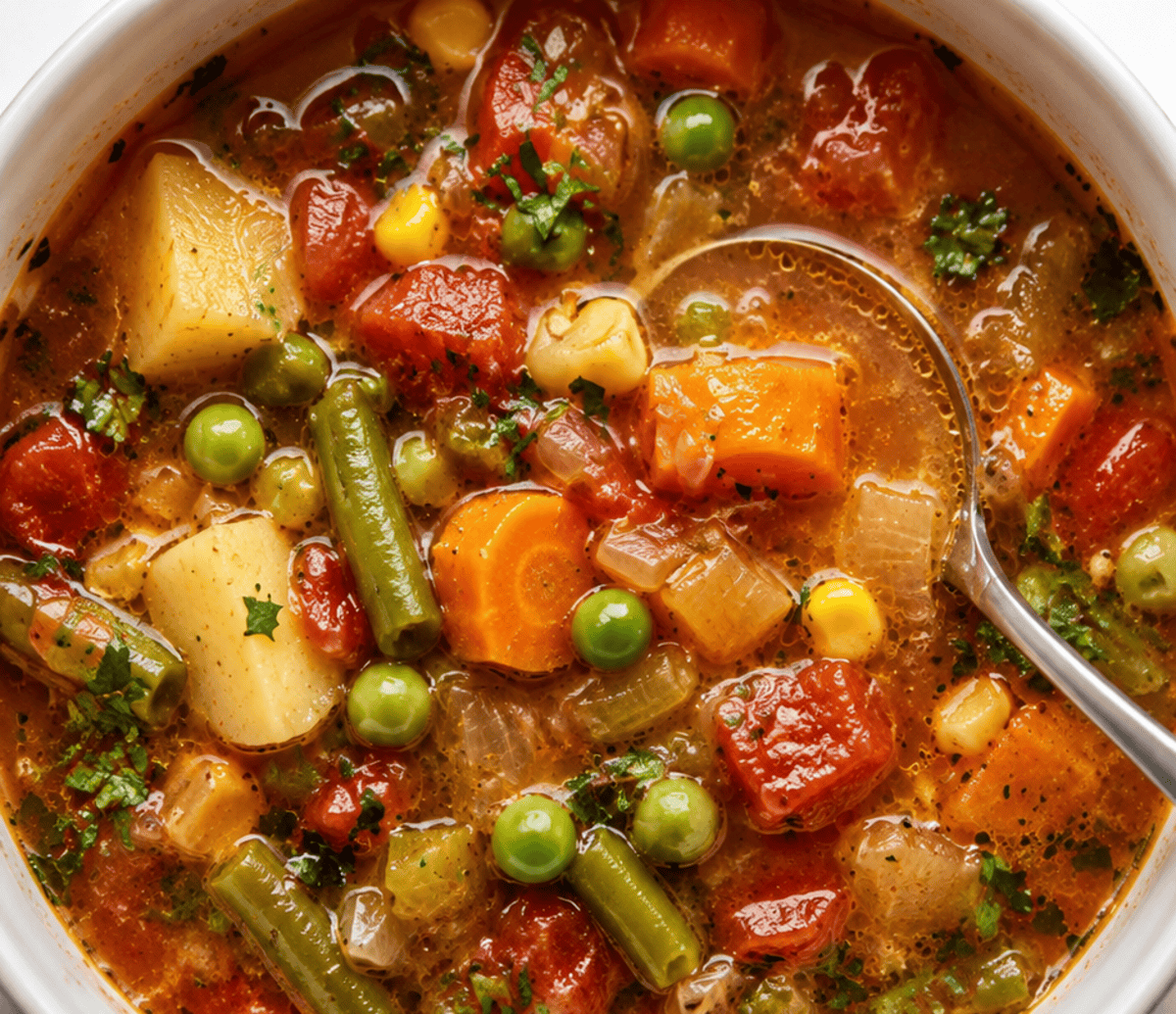
Some nights call for food that feels calm. Not fancy, not fussy, just a warm pot of something colorful bubbling on the stove while the kitchen starts to smell like garlic, herbs, and comfort.
This Vegetable Soup Recipe is exactly that kind of meal. It’s built with everyday vegetables, pantry seasonings, broth, and a little tomato paste for depth. The result is a cozy, spoonable soup with tender potatoes, sweet carrots, soft tomatoes, green vegetables, and a savory broth that tastes like it simmered longer than it actually did.
It’s beginner-friendly, budget-friendly, and perfect for meal prep. You can make it on a Sunday, portion it into containers, and thank yourself all week. It also works beautifully when your produce drawer has a few odds and ends that need a purpose.
Why This Recipe Works
The secret to a flavorful vegetable soup is not just tossing vegetables into broth. The flavor starts at the bottom of the pot.
First, onion, carrots, and celery cook in olive oil until they soften and smell sweet. This step builds the base. Then garlic and tomato paste go in for a quick minute. Tomato paste looks simple, but when it hits the hot pot, it darkens slightly and creates a richer, deeper flavor.
The vegetables are added in stages so nothing turns mushy. Potatoes need more time, while zucchini, peas, corn, and spinach need less. This keeps the soup bright, colorful, and balanced instead of flat and overcooked.
Ingredients with Exact Measurements and Notes
Main Ingredients
| Ingredient | US Amount | Metric | Notes |
|---|---|---|---|
| Olive oil | 2 tablespoons | 30 ml | Helps sauté the aromatics and carry flavor |
| Yellow onion, diced | 1 medium, about 1 cup | 150 g | Adds sweetness and depth |
| Carrots, sliced | 2 medium, about 1 cup | 130 g | Gives natural sweetness and color |
| Celery, sliced | 2 ribs, about ¾ cup | 90 g | Adds classic soup flavor |
| Garlic, minced | 4 cloves | 12 g | Use fresh garlic for best aroma |
| Tomato paste | 2 tablespoons | 33 g | Deepens the broth |
| Diced tomatoes | 1 can, 14.5 oz | 411 g | Use regular or fire-roasted |
| Vegetable broth | 6 cups | 1.4 liters | Low-sodium gives you better salt control |
| Yukon Gold potatoes, diced | 2 cups | 300 g | Creamy texture without falling apart too fast |
| Green beans, trimmed | 1 cup | 125 g | Fresh or frozen both work |
| Zucchini, diced | 1 medium, about 1½ cups | 200 g | Add later so it stays tender, not mushy |
| Corn kernels | 1 cup | 165 g | Frozen, canned, or fresh |
| Frozen peas | 1 cup | 145 g | Stir in near the end |
| Baby spinach | 2 packed cups | 60 g | Wilts quickly and adds freshness |
| Bay leaf | 1 | 1 | Remove before serving |
| Italian seasoning | 1½ teaspoons | 2 g | Easy blend of dried herbs |
| Smoked paprika | ½ teaspoon | 1 g | Optional, but adds gentle warmth |
| Salt | 1 teaspoon, plus more to taste | 6 g | Adjust depending on broth |
| Black pepper | ½ teaspoon | 1 g | Adds light heat |
| Lemon juice | 1 tablespoon | 15 ml | Brightens the soup at the end |
| Fresh parsley | ¼ cup chopped | 15 g | For a fresh finish |
Ingredient Deep Dive
Aromatics
Onion, carrots, and celery are the classic soup trio for a reason. They create a savory-sweet base that makes the broth taste fuller. Give them enough time to soften before adding liquid.
Tomato Paste
Tomato paste is your shortcut to “cooked-all-day” flavor. Stirring it into the hot pot for about 60 seconds removes the raw edge and gives the soup a richer color.
Potatoes
Yukon Gold potatoes are ideal because they turn creamy but still hold their shape. Russet potatoes work too, though they break down more and make the broth thicker.
Broth
Vegetable broth keeps the recipe vegetarian, but chicken broth also works if you don’t need it vegetarian. Low-sodium broth is best because canned tomatoes and broth can both carry salt.
Lemon Juice
Don’t skip the acid at the end. A little lemon juice wakes up the vegetables and keeps the soup from tasting heavy.
Equipment Needed
You’ll need a large Dutch oven or soup pot, a cutting board, a sharp knife, measuring cups and spoons, a wooden spoon, and a ladle. A microplane or garlic press helps with garlic, but it’s not required.
Step-by-Step Method
1. Heat the Pot
Place a large Dutch oven or soup pot over medium heat. Add 2 tablespoons olive oil and let it warm until it shimmers lightly. It should look glossy, not smoky.
2. Sauté the Soup Base
Add the diced onion, carrots, and celery. Cook for 6–8 minutes, stirring often, until the onion looks translucent and the carrots begin to soften. You should smell a sweet, savory aroma.
3. Add Garlic and Tomato Paste
Stir in the minced garlic and tomato paste. Cook for 60 seconds. The tomato paste should darken slightly and cling to the vegetables. This quick step builds major flavor.
4. Add Tomatoes, Broth, and Firm Vegetables
Pour in the diced tomatoes and vegetable broth. Scrape the bottom of the pot to lift up any browned bits. Add potatoes, green beans, bay leaf, Italian seasoning, smoked paprika, salt, and pepper.
5. Simmer Until Tender
Bring the soup to a gentle boil, then reduce the heat to medium-low. Cover partially and simmer for 18–22 minutes, or until the potatoes are fork-tender.
6. Add Quick-Cooking Vegetables
Stir in zucchini, corn, and peas. Simmer uncovered for 7–9 minutes. The zucchini should be tender but still hold its shape.
7. Finish with Greens and Lemon
Turn off the heat. Stir in spinach, lemon juice, and parsley. The spinach will wilt in the hot broth within 1–2 minutes.
8. Taste and Adjust
Taste the broth. Add more salt, pepper, or lemon juice as needed. Remove the bay leaf before serving.
Chef Secrets and Pro Tips
- Sauté before simmering. Raw vegetables dropped straight into broth taste flatter. A quick sauté adds sweetness and depth.
- Use low-sodium broth. It gives you control, especially if your canned tomatoes are salted.
- Cut vegetables evenly. Similar-sized pieces cook at the same speed.
- Do not overboil. A gentle simmer keeps the vegetables tender instead of ragged.
- Add soft vegetables later. Zucchini, peas, corn, and spinach need less time than potatoes.
- Use lemon at the end. Acid fades during long cooking, so add it after simmering.
- Let it rest 10 minutes. Soup tastes better after a short rest because the flavors settle.
- Add herbs in layers. Dried herbs go in early. Fresh herbs go in at the end.
- Save parmesan rinds. Add one during simmering for extra savory flavor, then remove before serving.
- Make it thicker if you like. Mash a few potato pieces against the side of the pot and stir them back in.
Common Mistakes and Fixes
Mistake 1: The Soup Tastes Bland
Fix: Add salt gradually, then finish with lemon juice. Bland soup often needs seasoning and acid, not more cooking.
Mistake 2: The Vegetables Turn Mushy
Fix: Add vegetables in stages. Potatoes and carrots need more time. Zucchini, peas, corn, and spinach need less.
Mistake 3: The Broth Tastes Too Acidic
Fix: Add a pinch of sugar or a splash of extra broth. This balances sharp canned tomatoes.
Mistake 4: The Soup Is Too Thin
Fix: Mash some potatoes in the pot, or simmer uncovered for 5–10 minutes.
Mistake 5: The Soup Is Too Salty
Fix: Add unsalted broth, water, or extra potatoes. A squeeze of lemon can also help balance saltiness.
Mistake 6: Garlic Tastes Bitter
Fix: Garlic burns fast. Add it after the onion, carrot, and celery soften, then cook it briefly.
Mistake 7: Spinach Turns Dark and Limp
Fix: Add spinach after turning off the heat. The residual heat is enough to wilt it.
Variations
1. Low-Carb Friendly Vegetable Soup
Skip the potatoes and corn. Add cauliflower florets, cabbage, mushrooms, or extra zucchini.
2. Protein-Boosted Vegetable Soup
Add 1 can of drained white beans, chickpeas, or cooked lentils. Stir them in during the last 10 minutes.
3. Pasta Vegetable Soup
Add ¾ cup small pasta during the last 8–10 minutes. Add extra broth because pasta absorbs liquid.
4. Spicy Vegetable Soup
Add ¼–½ teaspoon red pepper flakes with the garlic, or finish each bowl with hot sauce.
5. Creamy Vegetable Soup
Blend 2 cups of the soup, then stir it back in. You’ll get a creamy texture without heavy cream.
6. Italian-Style Vegetable Soup
Add cannellini beans, extra Italian seasoning, and a sprinkle of parmesan before serving.
7. Cabbage Vegetable Soup
Add 2 cups chopped cabbage with the potatoes. It softens beautifully and makes the soup extra hearty.
8. Chicken Vegetable Soup
Use chicken broth and stir in cooked shredded chicken near the end. Simmer just until heated through.
Serving Ideas and Pairings
Serve this vegetable soup with crusty sourdough bread, grilled cheese, garlic toast, cornbread, a simple green salad, turkey sandwiches, baked potatoes, or parmesan toast.
For a lighter meal, serve it with crackers and fruit. For a cozy dinner, pair it with warm bread and a little butter. For meal prep, portion it with cooked rice, quinoa, or beans on the side.
Storage, Freezing, and Reheating
Store cooled soup in airtight containers in the refrigerator for 3–4 days.
Freeze for 2–3 months in freezer-safe containers. Leave a little space at the top because soup expands as it freezes.
Reheat on the stovetop over medium-low heat for 8–10 minutes, stirring occasionally. You can also microwave individual portions in 60-second bursts, stirring between each round.
If the soup thickens in the fridge, add a splash of broth or water while reheating.
Make-Ahead and Meal Prep Plan
This soup is excellent for meal prep because carrots, potatoes, green beans, tomatoes, peas, and corn hold up well.
For best texture, add spinach fresh when reheating instead of storing it in the soup for several days. You can also chop the onion, carrots, celery, green beans, and potatoes 1 day ahead. Keep potatoes covered in cold water in the refrigerator so they don’t brown.
If freezing, slightly undercook the zucchini so it doesn’t become too soft after thawing.
Food Safety and Allergy Notes
Cool soup before storing, but don’t leave it sitting out for too long. Store leftovers in shallow containers so they chill faster. Reheat leftovers until steaming hot; FoodSafety.gov lists 165°F as the safe temperature for leftovers.
This vegetable soup is naturally meat-free and can be vegan if your broth is vegan. Check vegetable broth labels for common allergens such as soy, wheat, or yeast extracts. If you add parmesan, the soup will contain dairy.
The prompt mentions steak doneness guidance, though this recipe does not contain steak. If you serve steak on the side, USDA guidance lists 145°F with a 3-minute rest for beef steaks, roasts, and chops. Ground beef should reach 160°F.
Conclusion
This Vegetable Soup Recipe is simple, colorful, and deeply comforting without asking much from you. It’s the kind of recipe you can make once, enjoy for days, and adjust based on what’s already in your kitchen.
FAQ
Can I use frozen vegetables?
Yes. Frozen green beans, peas, corn, carrots, and mixed vegetables work well. Add most frozen vegetables during the last 10 minutes.
Can I make this soup in a slow cooker?
Yes. Add everything except zucchini, peas, spinach, lemon juice, and parsley. Cook on low for 6–7 hours or high for 3–4 hours. Add the remaining ingredients near the end.
Can I make it in an Instant Pot?
Yes. Sauté the aromatics first, then pressure cook the broth, tomatoes, potatoes, green beans, and seasonings for 5 minutes. Quick release, then stir in zucchini, peas, spinach, lemon, and parsley.
How do I make vegetable soup taste richer?
Use tomato paste, sauté the vegetables well, and add herbs. A parmesan rind or a splash of soy sauce can also add savory depth.
Can I add beans?
Absolutely. White beans, chickpeas, kidney beans, or lentils all work. Drain and rinse canned beans before adding.
Why is my vegetable soup watery?
It may need more simmering, more salt, or more body. Mash some potatoes into the broth or simmer uncovered for a few extra minutes.
Can I skip tomatoes?
Yes. Replace diced tomatoes with extra broth and add a little lemon juice or vinegar at the end for brightness.
What vegetables should not go in too early?
Zucchini, peas, spinach, and fresh herbs should go in near the end. They cook quickly and can lose color if simmered too long.
Is this soup good for meal prep?
Yes. It keeps well for several days and freezes nicely. For best texture, add spinach fresh when reheating.
Can I double the recipe?
Yes. Use a large stockpot and double all ingredients. You may need a few extra minutes for the soup to return to a simmer.


